
How Noisy Is an Air Source Heat Pump?
Learn how noisy an air source heat pump really is, what affects the sound and where to place it. Advice from a Walsall Air Source Heat Pump Installation team.
Air source heat pump noise is one of the first things Walsall homeowners ask us about, usually because of the neighbours as much as themselves. At Eco Air Source Heat Pump Installer, we are based in Walsall, open 7 days from 9am to 7pm, and we would rather you heard the honest answer before you commit. This guide covers what a heat pump sounds like, what makes it louder, and how placement keeps it quiet. For the full picture, see our air source heat pump installation page.
What does a heat pump actually sound like?
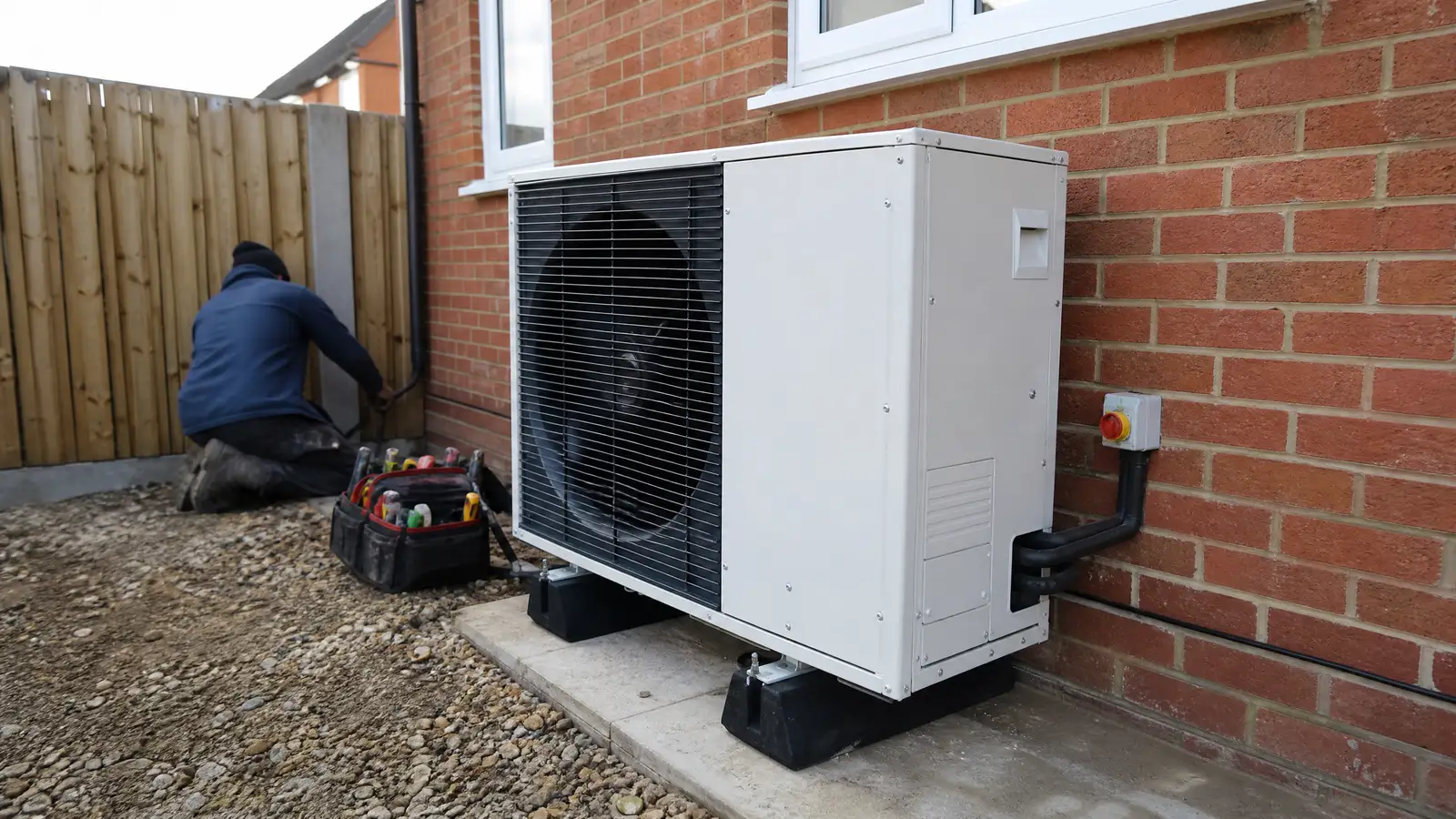
A heat pump makes a steady, low hum from a fan and compressor in the outdoor unit. It is usually heard as a background drone, a bit like a fridge or an extractor fan, rather than a sudden or sharp noise. Inside the house, you should hear very little.
The sound is not constant in strength. On a mild day the unit works gently and the fan turns slowly. On a very cold morning it works harder, so it is louder. Many modern units also have a quiet or night mode that lowers fan speed, though this can slightly reduce output.
Manufacturers publish a sound power level in decibels for each model. Those figures are measured at the unit, not at your neighbour’s window, so they say little on their own. Distance and surroundings change what you actually hear. We can talk you through the datasheet for any model we quote.
What makes one heat pump louder than another?
Four things matter most: the model, the size of the system, where the unit sits, and how well it is installed.
- Model and size. A larger unit heating a bigger or leakier house works harder and makes more noise than a smaller one in a well-insulated home.
- Position. A unit tight against a hard wall or in a corner reflects sound back at you. Placed in open space, it spreads out and fades.
- Mounting. Fixed badly to a thin fence or timber frame, a unit can pass vibration into the structure and cause a hum or rattle. Proper anti-vibration feet or brackets prevent this.
- Airflow. Blocked or cramped airflow forces the fan to work harder.
Heat pump type also plays a part. Monobloc systems keep all the components in one outdoor unit, and they are cheaper and quicker to install, while split systems can be slightly more efficient (Energy Saving Trust, 2026). Where the compressor sits can affect what you hear indoors, so it is worth discussing at survey stage.
Where should the unit go to keep noise down?
Place it away from bedroom windows, your neighbour’s windows and any boundary where people sit outside. A spot on a side wall or at the back of the house, with clear space around it, is usually better than a tight alley or a corner.
On a free home survey we look at the layout of your garden, where your neighbours’ windows sit, and where pipework can run neatly. Sometimes the best spot for noise is not the shortest pipe run, and we will explain the trade-off rather than just choosing the cheapest option.
Planning matters too. Most heat pump installations are permitted development, so no planning permission is needed, but you should check with your local planning department if you live in a listed building or conservation area (Energy Saving Trust, 2026). Your council can tell you whether noise conditions apply to your property. For official guidance on permitted development, check GOV.UK.
Is noise a reason not to fit one?
For most homes, no. The sound is modest and, once placed sensibly, tends to fade into everyday background noise. The bigger question is usually whether the system suits your house, and whether the costs stack up.
On cost, the Energy Saving Trust says a typical installation is around £12,000 (2026), while other guides give wider ranges, such as £5,000 to £15,000 from Worcester Bosch (seen Oct 2026). Heat pumps are more than three times more efficient than a gas or oil boiler (Energy Saving Trust, 2026). If you want the £7,500 Boiler Upgrade Scheme grant in England and Wales (Energy Saving Trust, 2026), that route comes through our MCS-certified partner, who quotes, installs and applies for the grant on your behalf. If you do not need the grant, we install the heat pump ourselves.
Key takeaways
- A heat pump produces a steady low hum, usually compared with a fridge or extractor fan, and it is louder in cold weather.
- Placement, mounting and airflow often matter more than the brand.
- Keep the unit away from bedroom windows and boundaries where possible.
- Sound figures on datasheets are measured at the unit, so ask what that means at your property.
- A free survey lets us check the best position before you commit.
Talk to a local installer
If you would like to hear what to expect at your own property, Call 01922 302461 or request a free survey. We are based in Walsall, WS1, you are welcome to visit us, and you will get a written quote with the costs explained in plain English.


Frequently Asked Questions
A heat pump's outdoor unit hums continuously while running, whereas a gas boiler is usually indoors and quieter outside. Most people find the heat pump sound mild and steady. Indoors you should hear little. Position matters most, so we check this at survey.
It can if it is placed badly, such as close to a neighbour's bedroom window or in a tight, reflective corner. Sensible siting, proper mounting and clear airflow reduce the risk. Check with your local planning department if you are in a conservation area or listed building (Energy Saving Trust, 2026).
Often, yes. Checking the mounting for vibration, clearing airflow, and using a quiet or night mode can all help. Sometimes moving the unit is the answer. Call us and we can talk through what you are hearing and whether a visit would help.
Thinking about an air source heat pump?
Call or send a message and we'll arrange a free survey of your home, then send a written quote.